
Wonderless
NOT ALL THAT GLITTERS IS GOLD

Wonderless
Much of what ails us as a society can be traced to a profoundly compromised sense of awe.
Authentic wonder has been replaced by complex illusions. At some level, we recognize this substitution. Our subconscious minds perceive the inadequacy of what we are consuming and reject it, even as we continue to engage. Something deeper in us resists. Our souls hunger for the transcendent, yet they atrophy under the constant barrage of contrived images and the many proxies that now stand in for real, lived experience.
This dissonance hangs like a millstone around our necks.
What we need is a more authentic relationship with the world around us. Instead, we are mediated—pulled into the algorithm and carried along by what I’ve come to think of simply as The Feed. Our attention is consumed by stressors that have little to no direct impact on our lives. We are expected to feel deeply about events we cannot influence and tragedies we cannot meaningfully address.
How should I feel about a tragedy in Uganda while living in Wisconsin?
What action can I realistically take to alter the course of a war in Ukraine?
These are not rhetorical questions. They get at the heart of a quiet assumption we’ve absorbed: that to be an “informed citizen,” we must internalize the suffering of the entire world.
So it is said that we have a responsibility to engage—to witness, to absorb, to react. If the information is available, then surely we must consume it. I don’t accept that premise.
How much of the global burden must a person carry before this obligation is fulfilled?
For many, the answer seems to be; all of it. There is always more to see, more to process, more to feel. An endless buffet of catastrophe is laid out before us each day. Choosing to step away—to enjoy time with family, to take a quiet walk, to look up at the sky—is often treated as avoidance, even irresponsibility.
I’ve found the opposite to be true.
The other night, I stood on my porch while the dogs wandered the yard before bed. I looked up and saw only a handful of dim stars, barely visible through the ambient glow of artificial light. It struck me how fitting that image is for our lives.
Light pollution obscures the sky, just as information pollution obscures our sense of wonder.
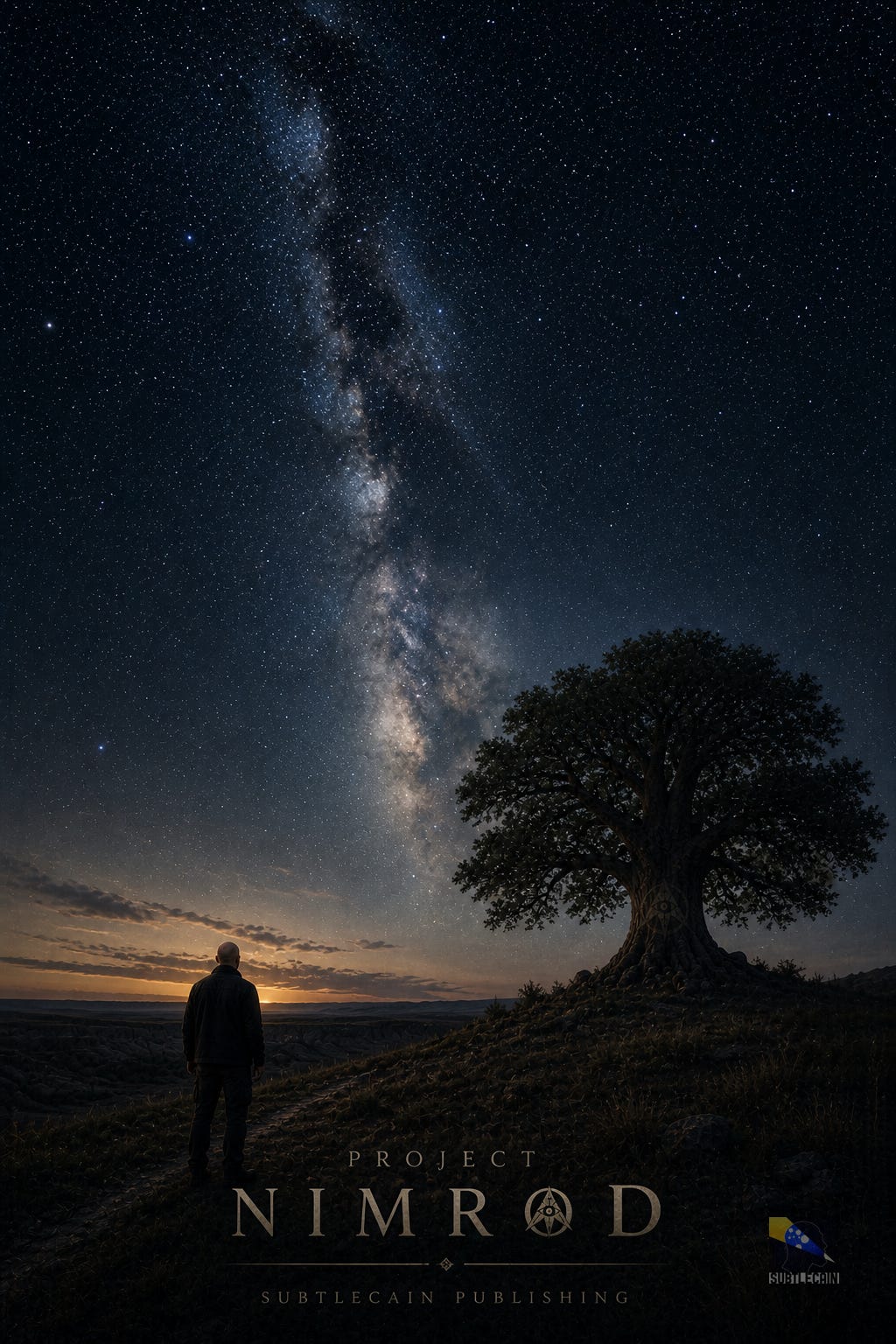
I remember a different experience years ago, standing on a hill in the Badlands on the Pine Ridge Indian Reservation. The sky was alive—stars scattered across the horizon, shooting stars cutting through the darkness. I felt small in that moment, but not diminished. There was a sense of awe, of order, of something greater than myself. A quiet reverence for the Creator and the vastness of what had been made.
That kind of experience has not disappeared. It has been drowned out.
What would happen if we stepped back from the constant stream of information? If we reduced the noise—turned down the volume of the endless feed of crises, outrage, and spectacle?
Would we begin to notice what is still there?
The subtle moments. The quiet details. The things that actually make up a life.
Instead, The Feed shouts over everything. It fills the silence with urgency—assassination attempts, geopolitical conflicts, scandal, fear. The signal never stops, and over time, it becomes harder to distinguish what matters from what merely demands attention.
There’s a biological component to this. We are wired with a negative bias—a survival mechanism meant to alert us to danger. In its proper context, it keeps us alive. But in the modern environment, that same mechanism is constantly triggered, exploited, and amplified.
What was once a protective instinct has been turned against us.
Like an autoimmune disorder, it no longer distinguishes between real threats and distant abstractions. The result is a kind of ambient anxiety—a persistent, low-level tension that never fully resolves. The “forever emergencies” and constant appeals to fear—whether for profit or political leverage—only deepen that condition.
This is not accidental.
But the point of recognizing it is not to despair.
The question is simpler than that: Is the information you are consuming actually helping you live better?
You can spend your days absorbing the horrors of the world, convincing yourself that awareness alone is a form of responsibility. You may believe that the discomfort is justified—that the pain is somehow necessary.
I would argue that it rarely is.
Like the stars hidden behind the glow of artificial light, there are countless moments of clarity, beauty, and meaning that go unnoticed—not because they are absent, but because they are obscured.
Life, in its purest form, is not found in the endless accumulation of information. It is found in the ability to recognize and appreciate what is directly before you.
This does not mean that suffering elsewhere is trivial. It means that your attention to it, in most cases, does little to change its outcome.
So there is a decision to be made.
Resist the urge to surrender your attention to everything that demands it. Be deliberate about what you allow into your mind. Take onto your shoulders only that which you can meaningfully influence.
It isn’t withdrawal. It’s clarity.
I try to practice this myself. I limit my exposure to the constant stream of catastrophe. I focus on what I can actually do—where I can act, where I can contribute, where my presence matters.
It wasn’t always that way. There was a time when I consumed everything—every looming crisis, every prediction of collapse, every urgent warning about what was supposedly just around the corner.
In most cases, the information was incomplete, exaggerated, or simply wrong.
And yet, here I am.
Less burdened. Less anxious. Still aware enough to navigate the world responsibly—without carrying the weight of things I was never meant to hold.
Information is just information. Knowledge is not enough. We must be wise. Wisdom is the judicious application of knowledge. And wisdom requires restraint—
the discipline to know what to ignore, what to carry, and what to leave behind. Not everything that demands your attention deserves it. Not all that glitters is gold.
Weened off the black mirror for the Digileak Newsletter. Still post a few things to Digileak on Bitchute. Spending most of the time gardening, reading at the ocean, riding my bike, seeing family and friends and getting what I need for when shortages come knocking at the door. Cheers, Kman, editor, DIGILEAK News Not Noise
That was the best thing besides scripture I read this morning. Thank you, been thinking these things too and need to shut off.